The Epstein affair could end Trump

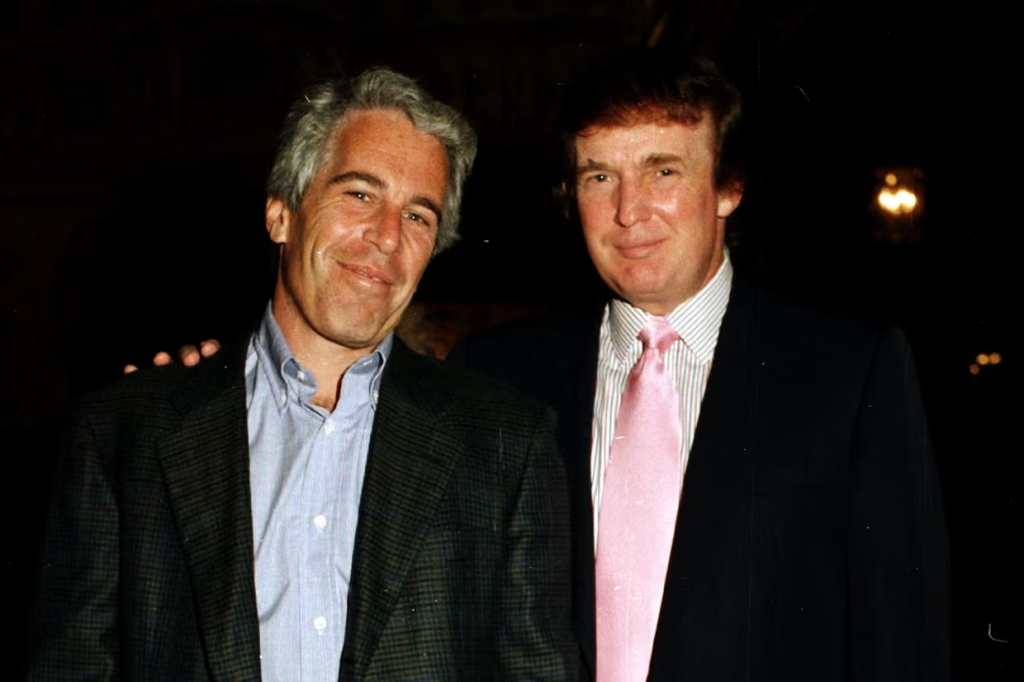
Jeffrey Epstein and Donald Trump, 1997. Photo: Davidoff Studios Photography/Getty Images

Since Donald Trump was reelected as President of the United States at the end of 2024, I’ve thought it was only a matter of time before he was removed from office by the Republican Party and replaced by JD Vance. Under the 25th Amendment to the US Constitution, there is a provision for the sitting President to be declared unable to discharge their duties, at which point the Vice President becomes Acting President. Replacing the loose cannon of Trump, with someone much younger and more polished than the increasingly befuddled Don, would be ideal for the conservative agenda – but it couldn’t be done without outraging the Trump base who the GOP have long relied on for support. Unless the base lost faith in Trump first…

For years, the MAGA and Q-Anon crowds have been obsessed with the idea that Democrats are all secretly paedophiles. When Hilary Clinton ran against Trump in 2016, the so-called “Pizzagate” conspiracy theory falsely claimed that high-ranking Democratic Party officials were operating a human trafficking and child sex ring out of a number of restaurants – including a particular Washington DC pizzeria. Pizzagate ended with a civilian entering that pizzeria and firing shots from an AR-15 style rifle (luckily, nobody was injured). The shooter, who subsequently spent four years in prison, claimed that he had wanted to “rescue children”. There were no child slaves there to rescue, of course, but the paedophile fixation of the right persisted well beyond this disturbing incident.

In 2019, during Trump’s first term as President, financier Jeffrey Epstein was arrested for the second time and charged with sex trafficking of minors. Epstein apparently hanged himself in his jail cell a month later, well before he could stand trial. Since then, rumors have circulated about his alleged client list and other material that could incriminate high-profile individuals. It has been claimed these “Epstein files” included names and details of people to whom Epstein supplied underage girls for sex, and could even include photographic, audio and video evidence. Right wing extremist YouTubers, podcasters and media personalities have been salivating over the prospect that some of their political enemies on the left could appear in these files.

Simultaneously, these same people have been downplaying or outright ignoring the fact that Donald Trump was friends with Epstein for decades. There are many photos and videos of the two socialising and partying together. Just this week, newly revealed photos showed that Epstein attended Trump’s 1993 wedding to Marla Maples. In a 2002 interview with New York Magazine, Trump was quoted as saying “I’ve known Jeff for fifteen years. Terrific guy… He’s a lot of fun to be with. It is even said that he likes beautiful women as much as I do, and many of them are on the younger side.” This was the man who is now the President of the United States, calling the man who is now the world’s most famous paedophile a “terrific guy”.

Now, Donald’s Epstein chickens are coming home to roost.

“The Epstein saga has become a snowball racing down Mount MAGA that the President has lost the capacity to stop.”

Philip Elliott, Senior Correspondent, Time

During the 2024 election campaign, Trump made some qualified claims that he would likely “declassify” the Epstein files. Many of his surrogates were less subtle. Releasing the files became a key talking point of the campaign and has continued being an issue into Trump’s second presidency. In a 21st February interview on Fox News, US Attorney General Pam Bondi said the Epstein client list was “sitting on my desk right now to review.” It has been revealed that, in March, around 1,000 FBI agents were tasked with combing through more than 100,000 pages of documents connected to Epstein. The expectation among Trump’s most ardent supporters was that the files were about to be released. They were finally (in their minds) going to get the ammunition they needed to destroy the satanic “Demon-crats”. Pam Bondi even staged what one reporter labeled “a theatrical display”, showing off large binders labeled “The Epstein Files: Phase 1”. The binders did not, however, contain much new information that was not already in the public sphere. As mid-year approached, the wheels of this particular wagon started to fall off.
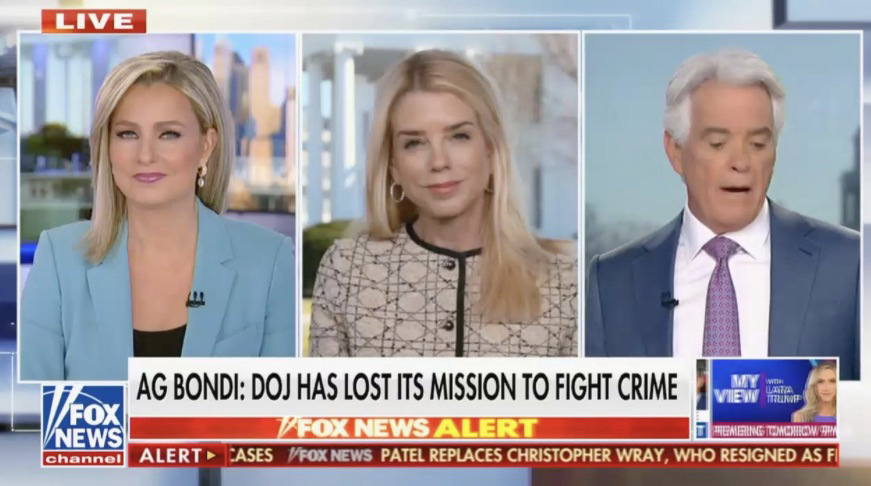
US Attorney General Pam Bondi appears on Fox News discussing the alleged “Epstein client list”

In the first days of June, the effervescent bromance between Donald Trump and Elon Musk came to a spectacular end. One of the high points (or low?) of the very public spat came when Musk claimed on Twitter/X that Donald Trump was named in the Epstein files. Musk deleted that tweet a couple of days later, but we now know that Pam Bondi had privately briefed Trump in May and warned him that his name appeared several times in the DOJ’s Epstein-related documents.

On 7th July, The Department of Justice published a statement claiming, in part, that there was no “client list” amongst the files and that there would be no further investigations into any uncharged third parties. This directly contradicted Pam Bondi’s earlier assertion that she was in possession of that list. Trump then posted a lengthy rant on his Truth Social platform where he complained about the focus on Epstein and claimed the Epstein files had been manufactured by the Democrats. It was all, apparently, a big hoax! Because of course it was.

“For years, it’s Epstein, over and over again. Why are we giving publicity to Files written by Obama, Crooked Hillary, Comey, Brennan, and the Losers and Criminals of the Biden Administration…”

Donald Trump, on Truth Social

The reaction from MAGA was swift and harsh. Their holy grail had been dangled in front of them, tantalising, so close they could smell it – then it had been whisked away, and they were told it had never existed at all. They did not take it well.

Right-wing commentator Candace Owens posted “Barak Obama wrote the Epstein files? LOL. This is outright embarrassing.”

The “Q-Anon Shaman” Jacob Chansley (famous for his distinctive headwear and makeup during the Capitol riot on 6th January 2021) commented “Fuck this stupid piece of shit… What a fraud.”

Matt Walsh: “I want to make this very clear to those on the right, including the President himself, who are telling us to just drop the subject and move on. We can’t drop it. We can’t move on, because what we want is justice.”

Laura Loomer warned the controversy could “consume [Trump’s] presidency.”

Candace Owens again: “Who is Trump protecting? Because he’s clearly protecting someone. Is it himself?”

Musk also stuck the knife in again: “Seriously. He said ‘Epstein’ half a dozen times while telling everyone to stop talking about Epstein. Just release the files as promised.”

All of this is just words, though. We have seen countless times that many on Trump’s side are as malleable with their outrage as they are with basic facts and objective reality. They, like Trump, will say one thing one minute and the exact opposite the next (while pretending they never said the first thing at all). In their pursuit of power, influence, status and punishing their enemies they will say literally anything they think benefits them at any given moment – regardless of what they’ve said before, and with little concern for the truth. What really caught my attention was the MAGA hats. In amongst all of the verbal backlash from the surrogates and influencers, ordinary Trump supporters started setting fire to their red hats.
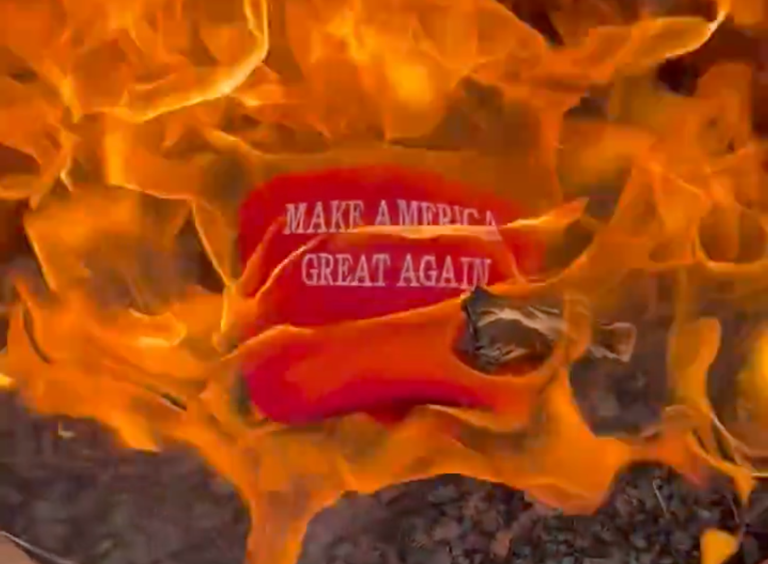
One of several videos showing red “MAGA” caps being burned. Twitter/X: @grimcalls

Social media lit up with videos of people burning their bright red MAGA caps. Hats were doused with lighter fluid then engulfed in flames, accompanied by the hashtag #ReleaseTheFiles. One hat-burner said in their video “I’m not gonna play with these anymore. MAGA hats are off… Burn baby burn.” Another opined “Why the fuck would you go to that island?” (A reference to Jeffrey Epstein’s infamous private island, Little St James.) If Trump loses the red-hat wearers, you know he’s in trouble.

The words from the right, for what they are worth, continued…

Joe Rogan criticised the government’s handling of the issue, saying, “Do they think we’re babies?” and “[FBI Director Kash Patel] is saying there’s no tapes, there’s no video. That doesn’t make any sense. Everyone knows it doesn’t make any sense.”

Republican senator Thom Tillis: “Look, I’m where I’ve been every time y’all ask me this question… Release the damn files.”

Conservative commentator Charlie Kirk: “I think every file should be released to the public the same way as the JFK files. Let the American people decide.”

But it’s these words from former Fox presenter Tucker Carlson, from back in March, that I want to draw attention to: “[Vice President JD Vance] is the only person in the entire Republican party, from my position, who’s capable of carrying on the Trump legacy and expanding it, making it what it should fully be”. The groundwork is already being laid for Vance to succeed Trump. (Not only that – according to Carlson, Trump hasn’t gone far enough.) Which brings me back to my original point: if Trump loses the support of the MAGA base, it could be the beginning of the end of his presidency.

It’s possible, of course, that this might all blow over – as so many disasters in Trump World have done before. He’s not called “Teflon Don” for nothing. Over the last few days, he has desperately tried to distract attention from Epstein by throwing out all manner of bait, including accusing Barak Obama of treason and posting fake, AI-generated video of the former President being arrested by the FBI. Just today he launched a clumsy attack on Beyoncé and Oprah Winfrey, among others, claiming they illegally received millions of dollars for endorsements during the last presidential campaign. Maybe something will finally stick, and draw attention away from the mess he is in regarding Epstein.

On the other hand, if the MAGA outrage over this issue continues it could represent the ideal opportunity for the GOP to finally rid itself of Trump and replace him with Vance. It would be perfect for them: they would retain all of the power that they have long sought, without the chaos that Trump unleashes everywhere he goes and with every word he utters. If a transition to a Vance Presidency was successful, I think a lot of Republican politicians would breathe a huge sigh of relief. The rest of us might pause before wishing for that to happen, though, regardless of our feelings towards Trump. We may find we’ve been thrown out of the frying pan and (along with quite a few red hats) into the fire.

Chris McIntosh


A little bit more…? See:

Murdoch already eyeing JD Vance presidency as his papers go to war with Trump (by Adam Sherwin, on MSN)

Making waves with like-minded creatives

Art of many kinds has the potential to be a lonely endeavour. The writer toils in their home office or a quiet corner of the local library; the painter in their studio; the ceramicist or sculptor in their converted garage or garden shed. American author and painter Henry Miller (allegedly) stated, “An artist is always alone – if he is an artist. No, what the artist needs is loneliness.” He might not have been speaking literally about the solitude of the practice, but the nature of the work often requires quiet contemplation, intense inner debate, or simply some uninterrupted time free from distraction.

Recently, a friend took a candid photo of me writing at the town library. Well… she caught me staring out the window, at least! “Ruminating”, she described it. I’ve spent a lot of hours at that desk over the past few months, ruminating and otherwise. I’ve enjoyed the space, finding inspiration in the thousands of books around me. I can still research online if I need to but there is also reference on the shelves, or I can just pluck out a book at random and flip through the pages. (Real books will never die. No digital alternative has yet reproduced all of the tangible – and intangible – qualities of a physical book. But that’s a discussion for another time.)

Candid photo of Chris sitting at a desk with his laptop open, thinking profound thoughts as he gazes out the window.
“Ruminating” at the Glen Innes Library. (Probably watching the magpies.)

While a lot of the artist’s work is done alone, art can also bring creative people together in amazing ways. The tiny rural community where I live is home to a pottery club, a sewing and quilting group, a music studio and an amateur theatre group. I’ve also participated in a couple of drawing groups around the area. These groups serve important social functions, and many of them also raise funds for various charities and community organisations. Now, Deepwater is home to the High Country Writers group, and it is this group that helped me take the final steps on my path to becoming a professional writer.

I don’t remember when I first attended the group, but it must be well over 18 months ago. I was looking for other local writers, an excuse to practice my craft, and some accountability. (Coaches of many kinds, from business coaches to personal trainers, will tell you of the importance of accountability in achieving your goals. When you are only answerable to yourself, it’s easy to shift the goalposts.) I found all of that and more. I have certainly connected with other writers, honed my own writing skills, and discovered the discipline of writing to a set of specifications – including a deadline. I’ve also started beta reading for other writers, and found a “writing buddy” who is on a similar path to me. The group had the opportunity to publish our collected short works in an anthology, and we have spent the last few months curating our collection and discussing marketing. Perhaps most importantly: being involved with this group gave me the last little bit of confidence I needed, the assurance that I actually had something worth saying.

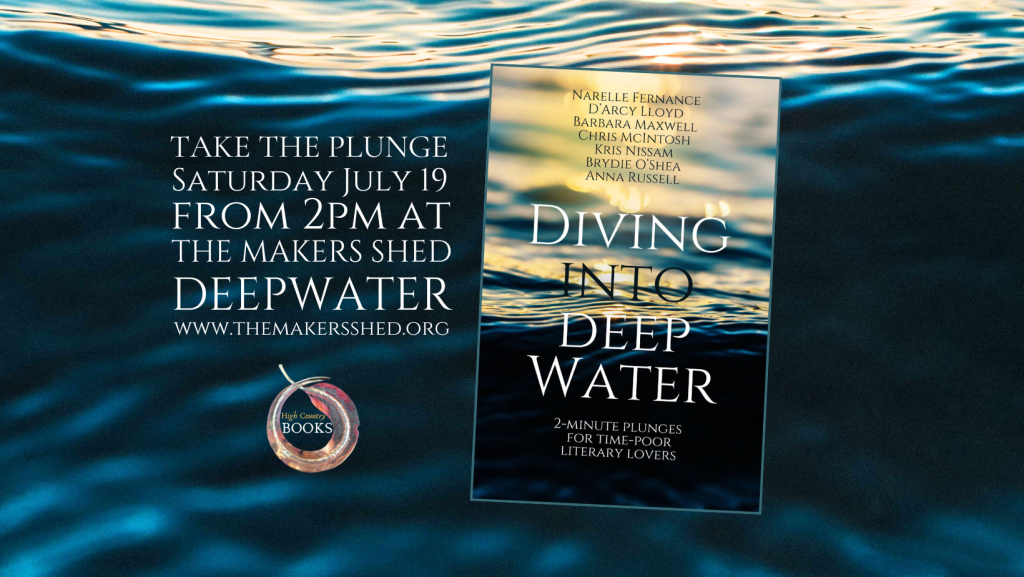
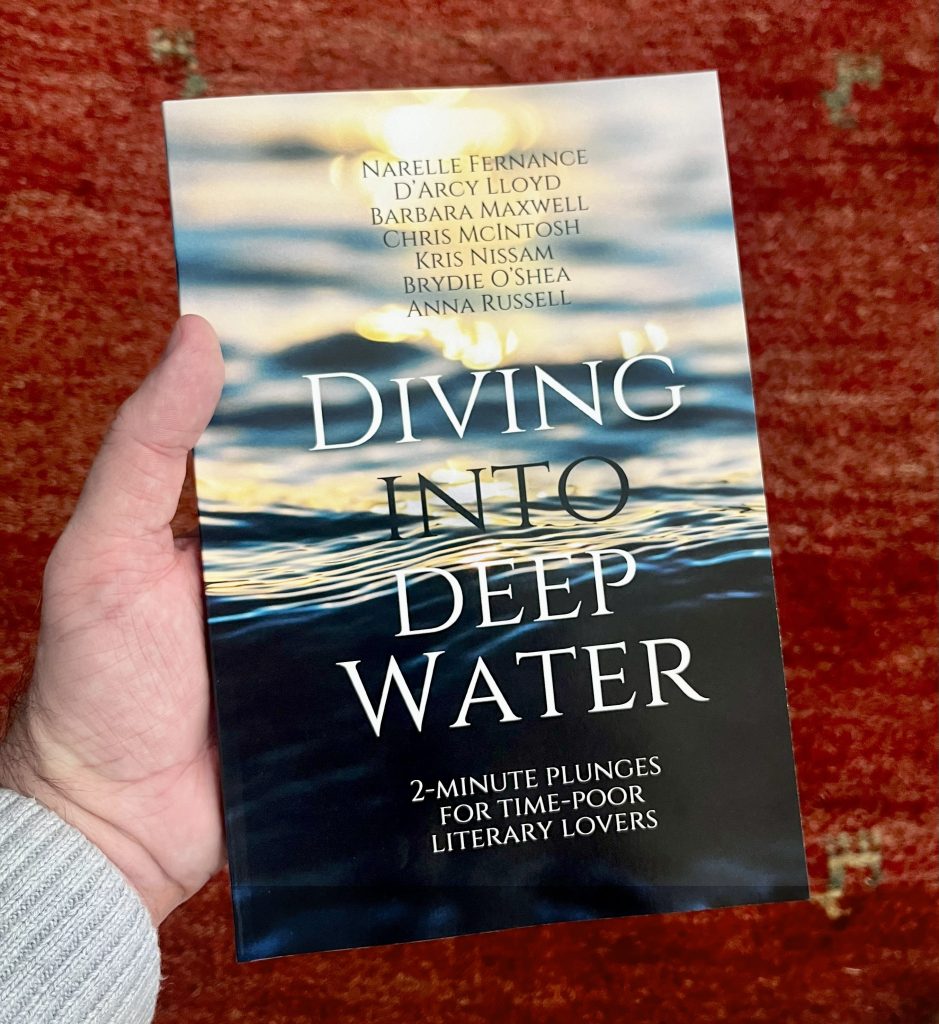
Cover of the "Diving into Deep Water" proof.

"2-minute plunges for time-poor literary lovers"
From little things, slightly bigger things grow. Proof copy of the “Diving into Deep Water” anthology.

Whatever form your creativity takes, find your tribe. Connect with other local artists, meet face-to-face, and forge social and professional connections. Join online forums dedicated to your particular craft. There is a lot of value in being exposed to the work of others, and offering and receiving honest critique (and encouragement). It there isn’t already a local group for your discipline, start your own! Art may very well require a degree of loneliness, but that doesn’t mean you have to do it entirely alone.


“Diving into Deep Water” is a collection of micro-fiction and other short written works, created by the members of the High Country Writers. It is being launched on the 19th of July at The Makers Shed in Deepwater NSW. All are welcome.

"Take the plunge, Saturday July 19 from 2pm at The Makers Shed. Deepwater."

Local writers’ group publishes anthology of micro-stories

I joined the High Country Writers’ Group a couple of years ago to meet other local writers, brush up on my skills and get back into the practice of writing. Over the course of our monthly sessions I did all of that, but in the process our group also produced a collection of short pieces that we were all quite happy with – and we are now about to have those pieces published in an anthology. This wasn’t expected but it’s a welcome and exciting step in my journey as a writer.

I’ll have a lot more to say about the group, some of the other people in it, and our process, but for now I want to briefly describe the book itself. “Diving into Deep Water” is a collection of around 70 pieces of writing spanning many genres and including micro-fiction, poetry, memoirs and biographies. It is the work of seven authors living in the New England region of NSW, along with our co-ordinator and mentor, Michael Burge, who is a published novelist and Guardian journalist. Many of the stories were prompted by a random word or phrase taken from another book plucked off a bookshelf.

“Two-minute plunges for time-poor literary lovers.” Waiting for a taxi, an Uber, or for a friend to join you for coffee? Skip the scrolling, and take a quick dip into another world, or another life. There is something here for everyone.

“What captivating works can writers produce when given a random phrase? This multi-genre collection of 300-word micro stories, penned by the eclectic High Country Writers of the NSW New England region, shows just how far the smallest inspiration can flow. With courage and curiosity, these wordsmiths gathered once a month to read their work and encourage one another, before randomly selecting the next writing trigger. Take the plunge!”

I’m not sure when the book will be available to purchase, but I’ll certainly be spruiking it when it is! We are having a launch party, though, on the 19th of July at The Makers Shed in Deepwater. The Makers Shed is the home of High Country Books and the High Country Writers Group, and is where a lot of the magic has happened in bringing this project to life. If you live in the area and would like to come along and help us celebrate, please do! When I know more about the format of the afternoon, I’ll post more details about that too.

Meanwhile: Since we completed our submissions for this anthology I have been working on another project, that will keep me busy until at least the end of 2025. I’ll drop a few hints about that from time to time. I’m also hoping to post articles and other shorter bits of writing on this blog, so come back again soon and see what else I have to ramble about.

The Internet is failing (as a source of information)

News and facts in a post-truth world

We are rapidly approaching the point where we won’t be able to trust anything we see, hear or read online. Could this spark a renaissance for traditional journalism?

Some of us are old enough to remember the world before the World Wide Web (or even the Internet itself). These days we take for granted that the most obscure questions can be quickly answered by picking up a smart phone, but in the ancient past of forty-something years ago it was a very different story.

Before the Internet became mainstream, people relied almost entirely on the “traditional” or “mainstream” media for information about current events. Newspapers, magazines, radio and television ideally provide researched and curated summaries of what’s happening locally, nationally and around the world. For more detailed study there are books, of course (how quaint!), and a range of technical schools, colleges and universities, but there wasn’t always an online resource providing instant, easy answers. Sometimes you had to work hard for an answer, and everything was filtered through a system of expertise and experience. At least, that was the idea…

The birth of the World Wide Web in 1993 was the beginning of the end for the traditional institutions’ monopoly on knowledge. The catchcry of the early Internet was “information wants to be free”, and the web promised to deliver the world directly into people’s homes at any time that was convenient to them and according to their interests. “Broadcast” became a dirty word. Information was going to be democratised. Anyone could be a journalist, or a published author. Anyone with a computer and a telephone line would have easy (if not literally free) access to information from all over the world. The gatekeepers of “the truth” would no longer control what could be known.

The web certainly disrupted traditional media and the delivery of education, and to some extent those lofty ideas did become reality. Today anyone can easily publish their own words, photos, audio and video online and have them accessed by others from anywhere in the world. However, finding what you’re looking for can be harder than it should be – and this was an issue right from the start. Directories like Yahoo! and search engines like Google quickly became essential tools in locating information on any given topic. Later, YouTube came to dominate online video. Social media sites like Facebook and Twitter added another layer to the online environment. These services were necessary for users to find their way around the online landscape, but it is painfully clear that these newer gatekeepers of the world’s knowledge are no longer fit for purpose.

Search engines are failing, flooded with low quality content and now more interested in value for their shareholders than valuable search results for users. Social media is broken, harming our mental health and our democracies. We are drowning in an ocean of lies, scams and toxic online behaviour. Paid troll farms in countries like Russia, Philippines, Nigeria and Venezuela churn out propaganda for politicians, PR firms, industry, security agencies and unscrupulous governments at a staggering scale. Meanwhile, there has been a decades-long war waged against the traditional media, education and science by those who see an educated and informed population as a threat to their wealth and power. These people actively seek to erode trust in the sources of information that are most deserving of trust. They understand very well the maxim “knowledge is power”, and they want all of the knowledge and power for themselves.

Regrettably, all of this is going to get much worse, and quickly. We haven’t even got to the elephant in the room yet – generative AI. The “Dead Internet” theory is becoming increasingly relevant. This concept states that genuine human activity online is being overwhelmed and replaced by inauthentic and computer-generated content. “Dead Internet” started a decade ago as a joke or conspiracy theory, but now this is what’s actually happening. We are reaching the point where so much content online is created dishonestly or by automated programs that we literally won’t be able to trust any of it – unless we personally know the source, or they have a reputable, real-world (offline) presence.

This all raises an important question: If our confidence in the media and public education is being eroded, yet we can no longer trust anything we see online, how can we know what is true? In a “post-truth” world how do we avoid the many traps being set for us, and where will we get accurate, honest information about what is happening around us?

This is the first in a series of articles where I’ll be exploring the decline of the Internet as a reliable place to obtain information. I’ll be looking in more detail at the failures of big tech companies and the governments that enable them, the ways we’ve been herded into echo chambers and information bubbles, deep fake technology, and more. I’ll also be looking at the road ahead: Have “alternative facts” won? Are we at a precipice, about to plunge into a new Dark Age where nothing is knowable? Or can we get to a place where honest, accurate, reliable information really is “free”?

Hello world!

A few months ago I wrote on my social media that, “Sometimes things don’t happen until you’re ready for them.” It feels like that’s been true with my writing. Throughout my life I’ve written a lot of words for a lot of reasons. I’ve even written as part of my previous work. I’ve never felt, however, that I could call myself “a writer”. Writing was always part of something else – part of a different job, part of a project, something to pass the time, a hobby, even therapy… But life always seemed to have other plans whenever I wanted to get more serious.

Now, I’m ready.

For the last 40+ years there’s been a handful of puzzle pieces shuffling around in my pocket. I’ve taken them out, had a fresh look at them, and they’ve finally fallen into place. The planets have aligned! Tea leaves have settled in a pleasing pattern and the wind is blowing in the right direction. And so: I take out my writer’s hat, dust it off, place it gently on my head, and begin to write. Seriously.

Let’s see where this path leads…

Chris